
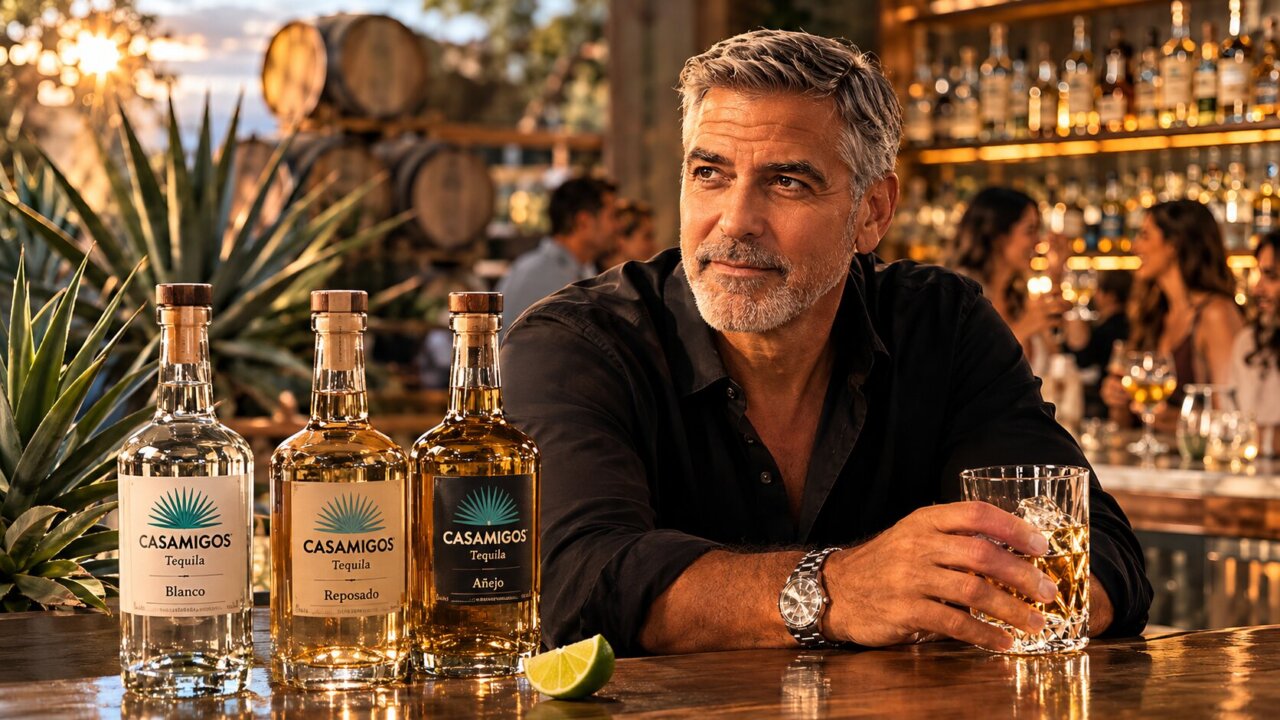
For decades, celebrity alcohol brands followed a familiar formula. A famous face appeared in advertisements, signed endorsement deals, and lent star power to products that often had little connection to the celebrity behind them. Then came George Clooney and everything changed.
When Casamigos launched in 2013, few people inside the tequila industry expected it to become one of the most influential spirits brands of the modern era. Yet within just four years, the company was sold to Diageo for up to one billion dollars, making it one of the largest acquisitions in tequila history.
The sale did not simply create headlines. It triggered an entirely new celebrity tequila wave that transformed the premium spirits market around the world.
What made Casamigos different was timing combined with authenticity. Clooney and his partners, nightlife entrepreneur Rande Gerber and real estate developer Mike Meldman, originally claimed the tequila was created for private consumption among friends. Whether consumers fully believed the story or not, the branding felt relaxed and personal compared to traditional luxury alcohol marketing.
At the same time, tequila itself was undergoing a major transformation. For years, many consumers outside Mexico still associated tequila with cheap shots and hangovers. But by the early 2010s, premium tequila was rapidly gaining status in the United States and Europe. Consumers were becoming more interested in artisanal production, agave origin, sipping culture, and high-end cocktails.
Casamigos entered the market exactly at that moment.
The brand’s minimalist bottle design also stood apart from the highly decorated packaging common in tequila at the time. Instead of gold labels and oversized logos, Casamigos looked clean, modern, and approachable. It appealed strongly to younger consumers and urban hospitality culture.
But perhaps the biggest impact of Clooney’s success was psychological. The billion-dollar exit proved that tequila could become more than a celebrity side project. Suddenly, celebrities, investors, distributors, and multinational drinks corporations saw tequila as one of the most valuable growth categories in global alcohol.
The floodgates opened.
In the years that followed, celebrities rushed into tequila at an unprecedented pace. Dwayne Johnson launched Teremana. Kendall Jenner introduced 818 Tequila. LeBron James backed Lobos 1707. Even musicians, athletes, and social media personalities entered the category.
Not all of these brands succeeded equally, but the strategy behind them became remarkably similar. Celebrity identity merged with lifestyle branding, social media reach, and premium positioning. Tequila was no longer marketed only as a Mexican spirit. It became part of fashion, nightlife, wellness culture, and celebrity image building.
Industry analysts have repeatedly linked this boom to premiumization trends. Consumers increasingly drink less alcohol overall but spend more money on higher-quality products. Tequila benefited enormously from this shift because it carried both craft appeal and luxury positioning.
Clooney’s influence also changed how major corporations approached acquisitions. Global drinks companies became far more aggressive in scouting emerging tequila brands before competitors could secure them. Since the Casamigos acquisition, valuations across the tequila sector have surged dramatically.
Yet the celebrity tequila boom has also sparked criticism. Some producers in Mexico argue that celebrity-backed brands often overshadow traditional tequila makers with generations of expertise. Others question whether marketing budgets and Hollywood visibility distort consumer understanding of quality and authenticity.
Still, even critics acknowledge the scale of the transformation.
Before Casamigos, celebrity tequila brands existed, but they rarely dominated industry conversations. After Clooney, celebrity tequila became a global business model.
The phenomenon was never just about one actor selling tequila. It was about changing the perception of what tequila could represent in modern culture. Luxury, lifestyle, investment potential, and celebrity influence suddenly merged into one of the fastest-growing categories in the global spirits industry.
And it all started with a simple bottle that looked very different from the rest of the shelf.


